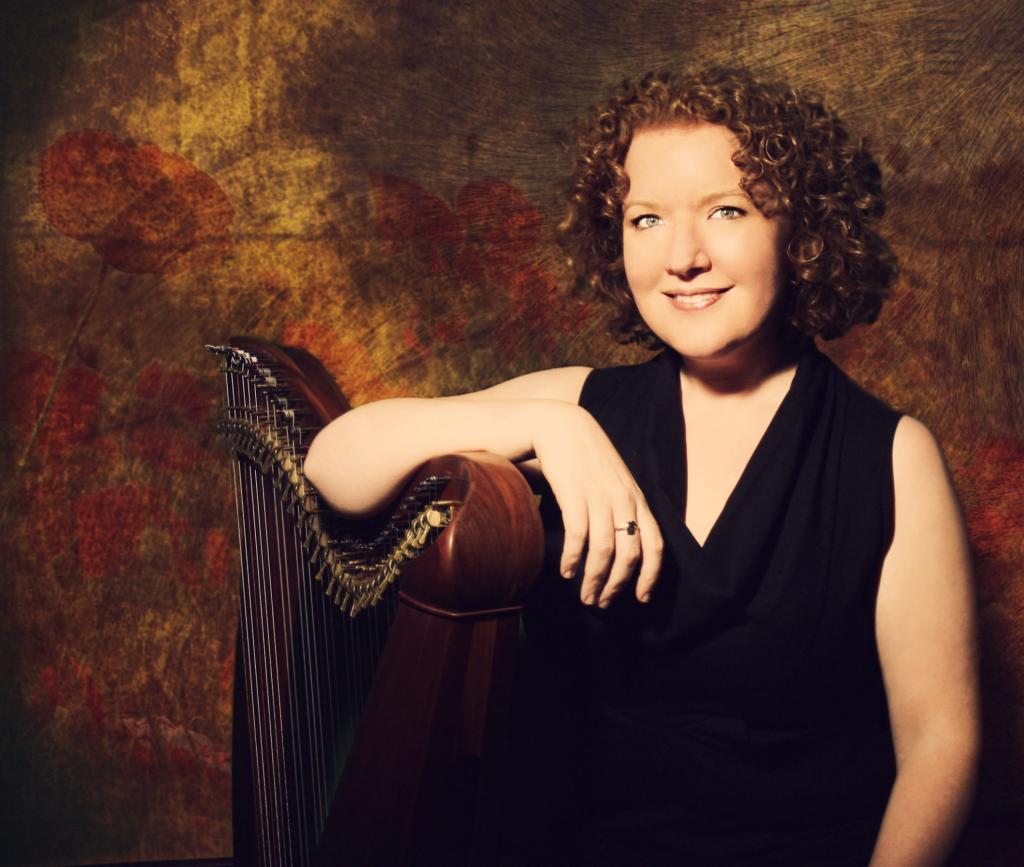
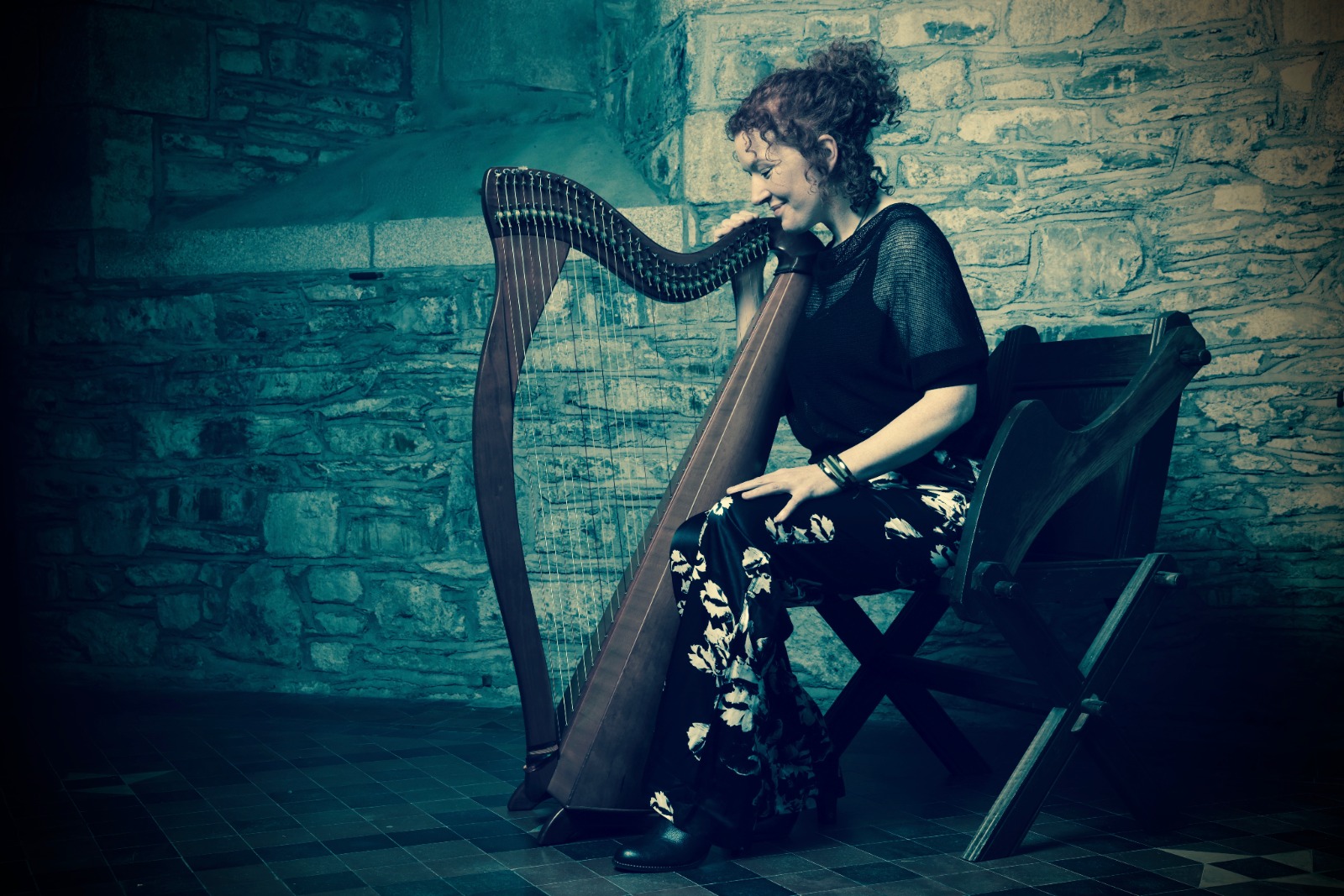
Tríona Marshall – Biography
Growing up in a musical family in Portlaoise, Ireland, I fell in love with the harp at the age of seven, and it has shaped every chapter of my life since. I was fortunate to study under the wonderful Aileen McArdle before earning a place at the Koninklijk Conservatorium in Den Haag at eighteen, where I spent four rich years under the guidance of Professor Edward Witsenburg. I went on to complete my postgraduate studies at the Royal College of Music in London, studying with Daphne Boden and graduating in 1998.
From 1998 to 2003, I held the position of principal harpist with the RTÉ Concert Orchestra — a period I look back on with great fondness. Highlights included performances, television and radio broadcasts of the Concierto de Aranjuez by Joaquín Rodrigo and the Harp Concerto in B-flat by George Friedrich Handel, as well as solo performances of The Seville Suite by Bill Whelan and The Pilgrim by Shaun Davey.
Everything changed in 2003. A chance visit to a Martin Hayes concert and a one-off
performance with The Chieftains at the BBC Proms in the Park lit a fire in me for Irish
traditional music that has never gone out. What was meant to be a single guest
appearance became something far more enduring — six months later, The Chieftains
asked me back, and I have been with them ever since. That journey has taken me on
extensive worldwide tours, onto platinum-selling albums, and in 2013, to the wonderful
honour of receiving an Honorary Doctorate from DIT.
My eponymous debut solo album, drawn entirely from Irish traditional music, was
released in 2006 to critical acclaim. Around the same time, alongside fellow Chieftains
colleagues Cara Butler and John and Nathan Pilatzke, I recorded an album and toured
internationally with the traditional band Tread.
As a solo performer on the traditional harp, I have been privileged to play at some truly
memorable occasions — among them the opening ceremony of the Special Olympics in
Croke Park Stadium, the Festival Mundial de Arpa in Paraguay, and the Ninth World Harp Congress.
In 2011, I released Red and Gold in collaboration with the renowned Scottish singer Alyth
McCormack — a pairing that felt entirely natural and one I have returned to with great joy. This was followed in 2015 by my solo album Between Two Ways, produced with composer and accordion player Martin Tourish. That album became something of a gathering of kindred spirits, featuring Irish music legends including Paddy Moloney on whistle, Seán Keane and Martin Hayes on fiddle, and Tim Edey on guitar — musicians I had been fortunate enough to meet and be inspired by along the way.
More recently, I have been exploring new and unexpected musical horizons. I travelled to
Japan to tour as a soloist alongside my brother, Thomas Ranjo, who plays the Satsuma
Biwa — the ancient instrument once used by samurai warriors to accompany their sung
accounts of battles, myths and legends. Together we wove threads between Irish and
Japanese traditional music, inspired by the writings of Lafcadio Hearn, the Irish-Greek
writer who made Japan his home and became one of its great storytellers. Those
concerts are continuing to grow, and we are now planning further performances under the title Kokoro — Echoes of Kwaidan.
I am also delighted to share that a new album with Alyth McCormack, Time to Leave the
Darkness, will be released later in 2026 — and I cannot wait for you to hear it.